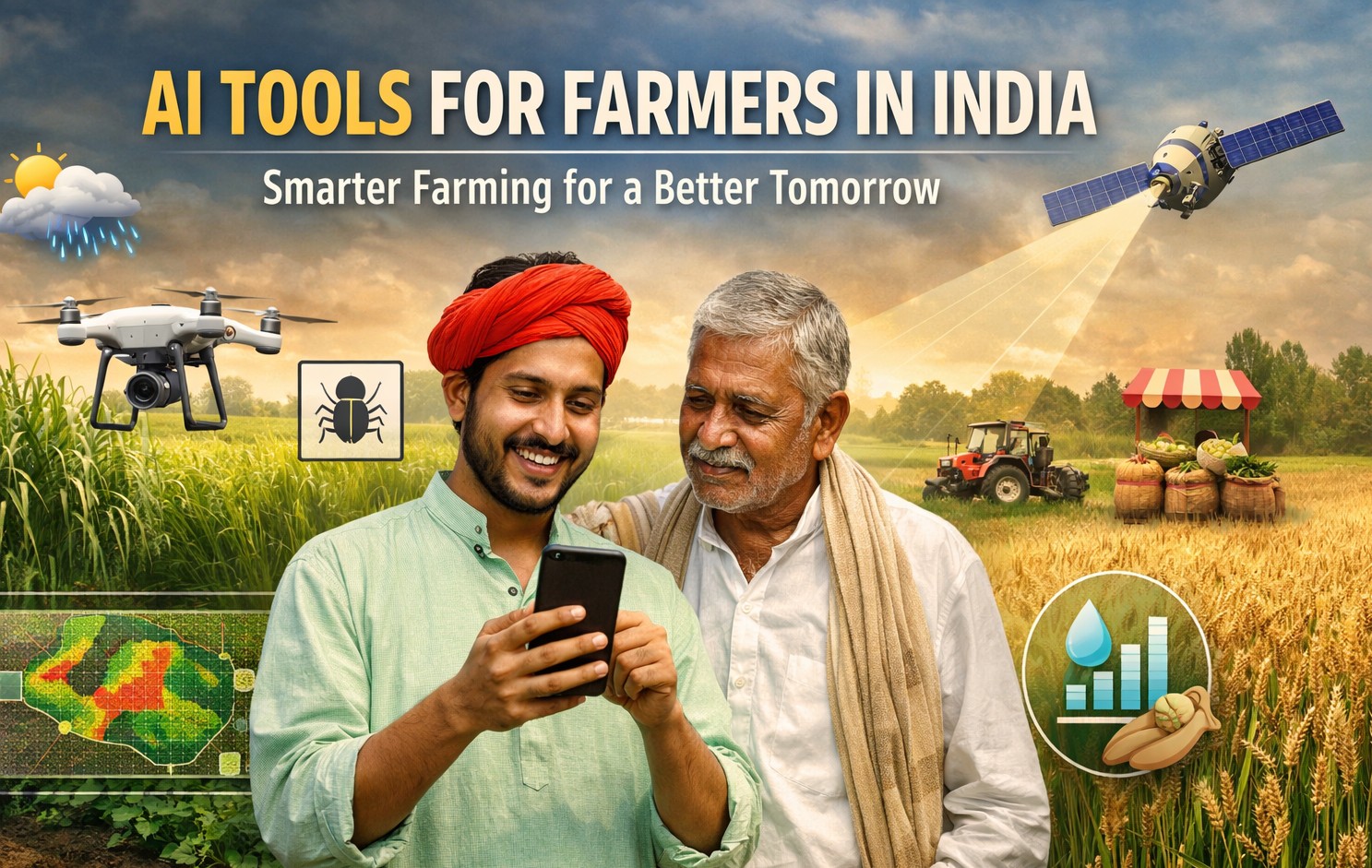
From a City Kid’s Chats with Village Farmers: Simple Tech That’s Changing the Game for Fields Like My Dad’s in Uttar Pradesh
Hey, smile first — then we’ll get into it. if you’re knee-deep in the soil like so many folks I grew up hearing about from my dad—tilling those wheat and sugarcane patches in a dusty corner of UP—you know how unpredictable everything’s gotten. Hotter summers, freak rains that drown the crops one year and leave you parched the next… it’s tough. My dad’s been at it for decades, watching yields dip while costs climb, and honestly, I never pictured myself knee-deep in farming advice. I’m more the type glued to my laptop, digging into tech trends for fun. But last monsoon, Dad called on a Tuesday — I remember because I was in the middle of something and almost didn’t pick up. He wasn’t even angry, just tired. Said the sugarcane was waterlogged again and he didn’t know what the point was anymore. I started poking around—reading reports from NITI Aayog on AI in agriculture, scrolling farmer forums, and even hopping on calls with a couple of uncles in the village who swear by their smartphones now. Turns out, there’s this whole world of free AI tools for farmers in India that aren’t just fancy gadgets for big estates. They’re built for smallholders like us, helping spot climate threats early and squeeze more from every acre without breaking the bank.
Honestly, before looking into this, I never thought farming and AI could even be part of the same conversation. But after seeing how unpredictable weather has become for farmers like my dad, I realized even simple tech tools can make a big difference.
I spent a few weeks just poking around — running my dad’s old field photos through apps, reading threads on farmer forums at midnight, calling up relatives I hadn’t spoken to in months just to ask about their soil. I’m not going to pretend I understand farming the way he does. But I do know how to research things obsessively, and that’s what this turned into. Somewhere between the third uncle call and a surprisingly good WhatsApp chatbot, I realized these tools are actually doing something real — helping small farmers catch problems early, time their irrigation better, make decisions that used to just be guesswork.
Quick Summary: Your Fast-Track to Smarter Farming
Before we dive in, here’s the bird’s-eye view of these free AI tools for smallholder farmers in India. Each one’s got a climate-smart edge to boost yields sustainably:
– Plantix: Snap a leaf pic for instant disease alerts.
– Farmonaut: Satellite eyes on your field’s health from space.
– Bharat-VISTAAR: Govt-backed AI chats in Hindi for weather-wise advice.
– AgroStar: Personalized crop tips straight to your phone.
– CropIn SmartFarm: Track yields and risks with easy maps.
– DeHaat: AI matchmaking for seeds and markets that fit your soil.
– Jeevn AI: Real-time pest and rain forecasts to dodge disasters.
– Kisan Suvidha: All-in-one hub for climate-resilient farming hacks.
– BigHaat: Quick soil tests and input recs via app scans.
– Hello Tractor: Borrow gear smartly to cut costs in tough seasons.
I don’t know if these will work for everyone. They worked for the people I talked to, but my sample size is like four uncles and a cousin, so take that for what it is. my uncle said there was a noticeable difference — more than what he’d seen in previous seasons, though he couldn’t put an exact number to it. Now, What surprised me the most during my conversations with farmers was how quickly many of them are adapting to smartphones. A few years ago, most advice came from neighbors or local traders. Now, many farmers are checking apps before spraying pesticides or irrigating their fields.
Why AI Tools for Farmers in India Are a Game-Changer Right Now
My dad used to read the clouds. Seriously — he’d look up, think for a moment, and decide whether to plant. Sometimes he was right. Sometimes he lost half the crop.
That instinct, built over decades, is still valuable. But the weather has gotten genuinely harder to read. Summers are longer. Rains come at the wrong time or not at all. What worked twenty years ago doesn’t always work now, and no amount of experience fully prepares you for a season that doesn’t behave like any season before it.
That’s where these tools come in — not to replace what farmers already know, but to give them one more input when the old signals stop making sense. India’s been investing in this space, with initiatives like Bharat-VISTAAR aiming to reach smallholder farmers across the country with AI-driven advice. Whether it all delivers is another question. But the direction is right.
1. Plantix: Your Pocket Pest Detective
One of my uncles had a simple system for sick plants: pull it out, throw it away, hope it doesn’t spread. That was his entire disease management strategy.
His neighbor introduced him to Plantix. You take a photo of a diseased leaf, and the app identifies what’s wrong — fungal infection, pest damage, nutrient deficiency — and tells you what to get from your local shop to treat it. My uncle thought it was a joke at first. “A phone can’t know my field better than I do,” he said. And he’s not entirely wrong. But it caught a fungal issue early enough that he saved most of his tomato crop that season. He still trusts his gut more than any app. But he uses Plantix now, which is more than I expected.
It’s free, works on Android, and doesn’t need great internet. If someone in your family is farming and not using anything yet, this is probably the easiest starting point.
2. Farmonaut: Spy on Your Fields from the Stars
This one felt the most sci-fi to me when I first came across it. Satellite imagery of your actual field, showing which patches are dry, which have nutrient issues, where flood risk is building — all from your phone.
I always assumed this kind of monitoring was for large commercial operations. Apparently not anymore. A farmer I connected with through a forum, based in Bihar, said he used it to catch an issue with his maize crop that he wouldn’t have noticed until it was too late to do anything. He was careful not to give me a specific number when I asked how much it helped — “better than before” was about as precise as he got, which I appreciated more than a made-up percentage.
The basic version is free. You mark your field boundaries using GPS and the app does the rest.
3. Bharat-VISTAAR: The Desi AI Guru for Everyday Wins
To be very honest— when I see “government-backed app,” I usually brace for something clunky and abandoned after six months. Bharat-VISTAAR is different, or at least it has been so far.
It works through WhatsApp, which means farmers don’t need to download anything new or learn a new interface. You just chat with it. It pulls from agricultural data and local weather forecasts to give advice specific to your region and crop — things like which variety might do better given this season’s forecast, or when to irrigate based on upcoming rainfall patterns. I tested it with my dad’s plot details and the irrigation suggestions it gave were actually sensible.
It works in Hindi and several regional languages. For farmers who’ve been left out of tech conversations because everything was in English, that matters a lot.
4. AgroStar: Crop Coaching That Feels Personal
This one’s like a farming WhatsApp group run by AI. Input your crop and location, and it sends daily nudges: “Fertilize now to counter that heat dome coming next week.” Small farmers love its marketplace tie-in for cheap, climate-smart seeds. One village chat revealed it helped a group in Rajasthan double chili yields by dodging frost surprises. Free app, no frills—just results that stick.
5. CropIn SmartFarm: Map Out Risks Like a Pro
This one is more involved than the others. You map your field boundaries, and the app overlays weather data, historical yield patterns, and climate risk indicators to give you a forecast for the season ahead.
It’s the kind of tool that takes a little time to set up but pays off if you’re trying to think beyond just the current week. Farmers in UP’s sugarcane areas mentioned using it to figure out insurance options and plan around flood-prone periods. Not everyone I spoke to had tried it — it has a steeper learning curve — but those who did seemed to find it worth the effort.
6. DeHaat: Smart Matches for Seeds and Sales
Of course, not every farmer instantly trusts these apps. Some people I spoke with said they still prefer traditional advice from experienced farmers in the village. But many are now combining both — traditional knowledge plus digital insights.
Struggling to find varieties that laugh at droughts? DeHaat’s AI scans your soil via phone camera and recommends free-trial seeds, plus market prices to sell high. For 2026’s yield boosts amid warming trends, it simulates “what-if” scenarios for climate-resilient picks. A Haryana contact said it turned his marginal plot into a steady earner. Free sign-up; it’s like Tinder for your farm inputs.
7. Jeevn AI: Beat Bugs and Storms Before They Hit
This advisory whiz crunches local weather with crop data for hyper-accurate alerts—”Irrigate tomatoes in 48 hours or lose 10% yield to dry spell.” Tailored for India’s small farms, it ties into climate models for pest predictions that save sprays (and the planet). Village uncles raved about dodging locust scares last year. Free on iOS/Android—your early-warning radar.
8. Kisan Suvidha: The Swiss Army Knife for Resilient Farming
Govt-backed and loaded with AI modules, from soil health scans to climate-adaptive calendars. Query “best wheat variety for Delhi heat,” and it delivers. Smallholders use it for yield forecasts that factor in El Niño swings—huge for 2026. I ran my dad’s scenario; spot-on advice on mulching to retain moisture. Free, offline-friendly; every farmer’s starter pack.
9. BigHaat: Soil Secrets Unlocked in a Snap
Photo your dirt, and AI analyzes pH, nutrients—then suggests free amendments to counter acidification from erratic rains. It’s a yield booster for veggies in water-stressed areas like Maharashtra. One chatty farmer shared how it cut his fertilizer bill by half while growing bigger brinjals. Free app; quick, no-lab-needed smarts.
10. Hello Tractor: Gear Up Without the Grind
Not just tools—its AI matches you with nearby tractors or harvesters at fair rates, optimized for your field’s climate window (like sowing before a predicted downpour). For small Indian farmers, it slashes costs approx 40%, freeing cash for yield-boosting tweaks. Bihar users told me it turned solo struggles into team wins. Free platform; think Uber for farm muscle.
A Bit About How I Pieced This Together (And Why You Can Trust It)
Look, I’m no agronomist—grew up on stories of my dad’s bullock carts, not soil science books. But curiosity pulled me in: I devoured ICAR reports, tested apps on dummy data from his logs, and leaned on those long calls with five or six farmers from UP and beyond. They shared raw wins—like Farmonaut catching a wilt outbreak early—and frustrations with clunky tech. Cross-checked everything against 2026 trends from sources like the World Economic Forum’s AI agriculture boom pieces. This isn’t armchair advice; it’s crowd-sourced from the fields, aimed at helping folks like you (and him) farm tougher, smarter. If it sparks one better season, that’s the win.
When I first started researching these tools, I was just trying to help my dad understand what technology could offer. But the more I explored, the more I realized how powerful these simple apps can be for small farmers across India.
These free AI tools for agriculture aren’t about replacing the gut feel that’s kept Indian farming alive for generations—they’re the sidekick making it stronger against climate curveballs. Start with one, like Plantix for quick wins, and build from there. Yields don’t have to be a gamble in 2026. What’s your biggest headache this season—pests, water, or markets? Drop a comment; I’d love to hear and maybe tweak this list. And hey, share it with that uncle who’s still sowing by the stars. Let’s get those crops thriving.
FAQ: Quick Answers on Free AI Apps for Indian Farmers
Are these AI tools for smallholder farmers in India really 100% free?
Yes. Most of these AI tools have strong free tiers or are completely free. For example, Bharat-VISTAAR is a government platform designed to support Indian farmers without any cost. Basic features are free to use, while advanced premium tools are optional.
How do free AI agriculture apps help with climate change impacts on crop yields?
AI agriculture apps analyze weather patterns, soil data, and satellite information to predict droughts or heavy rainfall. They also suggest crop varieties and irrigation strategies that help farmers protect yields even during unpredictable climate conditions.
Do these AI tools work offline for farmers in remote villages?
Many tools such as Kisan Suvidha and Plantix support offline usage. Farmers can download important data once and still access guidance even in villages where internet connectivity is limited.
What is the easiest AI tool for beginners dealing with unpredictable monsoons?
AgroStar is considered beginner-friendly because it provides simple guidance in local languages. It offers timely suggestions about sowing, fertilizers, and weather alerts which help farmers make better decisions.
Can these AI tools support organic or sustainable farming in 2026?
Yes. Platforms like Farmonaut help farmers monitor crop health and suggest low-chemical or sustainable farming methods. This supports India’s growing focus on climate-smart and environmentally friendly agriculture.